Amid this week’s headlines about flatlining jobs numbers, confirmation votes and the Strait of Hormuz, conservatives on social media (including the vice president of the United States) sniped at each other over an entirely different topic: the humble burrito.
The ongoing imbroglio is part of a broader question for conservatives: A year and a half into Trump’s second term, what should they tell voters increasingly unhappy about rising inflation and sluggish job growth? For many Republicans, including the president, the answer is “Stuff it.”
At least some Republicans and conservatives are admitting the price of food is higher than many Americans can comfortably digest.
Earlier this week, a spokesperson for Turning Point USA, the conservative advocacy organization focusing on younger Americans, raised the issue of inflation in a way any college student — or, really, anyone — could understand: the price of Mexican food. “One of our TPUSA college students gave me his take on affordability: ‘A burrito shouldn’t cost $20,’ TPUSA spokesman Andrew Kolvet tweeted. “It just feels like basic things cost too much.”
The problem is not inflation or affordability, responded a number of conservatives. It’s lazy — and young — Americans, who are refusing to cook or take responsibility for their own finances. “Stop whining, get a job, eat Ramen like the rest of us did in college,” tweeted Rep. Dan Crenshaw. Commentator Ben Shapiro, seemingly under the impression the student was looking for a handout, wrote, “We have enough problems as a country without insane expectations that the government is going to provide us with gourmet-quality burritos.”
Washington Post columnist Marc Thiessen echoed Crenshaw’s dietary advice: “When I graduated I lived on ramen noodles, had two roommates, and worked two jobs. I didn’t whine about affordability, I worked hard so I could one day afford a better life.” As if on cue, Fox Business ran a segment decrying Gen Z’s supposed proclivity for spending on “little treats.”

This is unlikely to be a palatable message at the ballot box, and at least some Republicans and conservatives are admitting the price of food is higher than many Americans can stomach. “How about young families with kids who are struggling to afford groceries because prices have doubled in 10 years while wages haven’t?” Christine Pushaw, a prominent aide to Florida Gov. Ron DeSantis, replied to Crenshaw. UnHerd editor Sohrab Ahmari pointed the finger of blame straight at the president. “[T]his is what happens when commentators refuse to be honest about the consequences of their preferred policies — in this case, the inflationary effects caused by President Trump’s war with Iran.” Even Vice President JD Vance chimed in to criticize Thiessen.
Despite the vice president’s comments, the denial is coming straight from the top. Trump has claimed he’s brought down prices “incredibly” and has called the affordability crisis a “con job” and a “hoax.” His Cabinet members and political supporters follow his lead. On Tuesday morning, Treasury Secretary Scott Bessent told CNBC’s Squawk Box that not only is he “sick” of hearing about a “K-shaped economy” — the term for economic gains going disproportionately to the wealthiest people — but it is also untrue. “I can say here definitively, the K-shaped economy is over, and we’re seeing a more of a C economy, where the lower wage earners are finally calling it back.”
There’s little question Trump and his enablers are responsible for the current round of inflation.
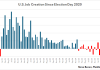
Well, we Americans are “sick” of the nation’s economic situation too. Gallup’s regular polling recently found that “Americans remain broadly pessimistic about the economy,” while Glassdoor’s monthly polling revealed that employee confidence is at record lows. The July jobs report, released Friday, showed that Americans are hardly imagining things: The economy shed 23,000 jobs last month, and estimates for May and June were also revised down by 103,000 jobs. The labor force participation rate continues to fall in the face of weak demand for workers. And wage growth continues to trail inflation.
No wonder that, when The New York Times asked the Treasury Department what data Bessent based his assessment on, the newspaper didn’t even receive the courtesy of a response.
In fact, there’s little question Trump and his enablers are responsible for the current round of inflation. It’s not just the ongoing war with Iran. As I pointed out last month, the Trump administration has resisted cracking down on monopolies that dominate markets and raise prices, allowing corporations ranging from airlines to healthcare companies to greedily raise prices and degrade services to juice their own profits.

Meanwhile, the stock market hit a record high this week, and corporate profits are soaring, further strengthening the winners of the K-shaped economy. As the right debated whether people should stuff their own burritos, the Wall Street Journal reported that a $100 hot dog stuffed with caviar sold out at Formula One’s Miami Grand Prix and the Miami Open tennis games. That should give everyone food for thought.
The $20 burrito joins avocado toast and fancy coffee in the long list of spending boogeymen used to wave away complaints about the cost of living. Think of it this way: Americans are begging for financial relief, not financial scolding. Telling those who think the price of burritos is increasingly too much to swallow is not just politically unappetizing; it’s also offensive and tasteless.
The post A ‘$20 burrito’ debate shows the right’s struggles with Trump’s economy appeared first on MS NOW.