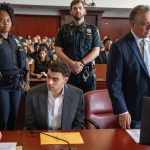
To hear Utah prosecutors tell it, they have a straightforward death penalty case against Charlie Kirk’s alleged assassin, Tyler Robinson. The defendant’s lawyers said the state has contorted the law in pursuit of the ultimate punishment against their client.
A judge will decide whether the prosecution can proceed to trial as a capital case, which could result in Robinson’s execution if he is convicted and sentenced to death and that conviction and sentence are upheld on any appeal.
In reaching this important procedural decision, Judge Tony Graf won’t be determining whether Robinson is guilty of the charges. At this preliminary stage, the state court judge is only deciding whether the case is legally sound enough to proceed to trial, where prosecutors would have to prove their case beyond a reasonable doubt. Defendants are presumed innocent.
The preliminary question for Graf to decide is whether there is probable cause, meaning a reasonable belief that a crime was committed and that the defendant committed it. The state has stressed that this is a “low bar,” while arguing that it’s easily cleared in this case.
When it comes to the death penalty, the issue isn’t simply whether the state can prove that Robinson killed Kirk by fatally shooting him last year as the conservative activist spoke to a crowd at Utah Valley University. Rather, to make this a capital case, prosecutors must show that Robinson did so under circumstances in which he “knowingly created a great risk of death to another individual” — meaning at least one other person besides himself or Kirk.
“The evidence readily establishes probable cause,” the state argued in a court filing to Graf, who is set to hear oral arguments from the parties on Sept. 1 before making a final decision on what charges can move forward to trial.
‘Zone of danger’
Prosecutors broke their death penalty argument down to two sets of other people who, they said, were at great risk of death when Robinson fired at Kirk: Everyone who was in Robinson’s line of fire, and everyone who was near Kirk.
On the first point, within the broader argument that everyone in Robinson’s line of fire was in the “zone of danger,” the state zeroed in on a person in the crowd who was questioning Kirk when he was shot.
“The questioner was just a few feet in front of Mr. Kirk and directly between the sniper perch on the Losee Building roof and Mr. Kirk,” the state said, pointing out the risk of not only being directly hit by a bullet but also the risk of a bullet ricochetting. “These same factors apply to the several others who were directly behind the questioner, and thus also within Defendant’s line of fire.”
Prosecutors further asserted that Robinson had loaded his rifle with four cartridges, which, according to the state, is relevant to the risk-to-others factor because it shows the shooter thought he might miss his first shot. Also on that note, the state said Robinson conducted target practice before the shooting and he did not always hit the bull’s-eye.
“Indeed, some of his shots completely missed the paper target,” the state said.
On the second category of others that prosecutors argued Robinson placed at great risk of death, the state said there were at least two people who were standing under the tent where Kirk was sitting, as well as others near the front, sides and back of the tent. They, too, were in the zone of danger, prosecutors argued — especially, they said, because Robinson “used a high-powered rifle to kill Mr. Kirk.” Similar to the state’s argument regarding the first category of people in Robinson’s line of fire, the state cited the risk of “stray, ricocheting, and pass-through bullets” creating a “zone of danger for anyone close to a shooting victim.”
‘Unconstitutional expansion’
In their own brief to Judge Graf this week, Robinson’s lawyers said the state failed to clear the probable cause hurdle, arguing that prosecutors are pursuing “an unconstitutional expansion” of the great-risk-of-death factor.
On what they called the state’s “line of sight” theory, Robinson’s lawyers said it lacks a legal basis because it comes from other state court rulings that Utah hasn’t adopted. And factually, they said, it “defies logic,” because if the questioner in the crowd had been in the shooter’s “line of fire,” then the questioner would have been struck by the bullet that struck Kirk. They said the state’s evidence “supports that the bullet travelled above, not through, the crowd.”
Responding to what the defense called the category of people “anyone near” Kirk, Robinson’s lawyers argued that the state’s evidence doesn’t support that the shooter was aware of a high probability that someone else might die from the “single gunshot that hit the intended victim.” They said there was no one directly next to Kirk when he was shot, and they stressed that there was only one shot fired.
Ultimately, even if the judge doesn’t find the state’s argument to be a slam dunk or the defense argument to be outlandish, he could still let the case proceed to trial because, again, he isn’t deciding whether Robinson is guilty; he is only deciding whether the case meets the minimum requirements for a jury to be allowed to make that guilt determination at trial.
That, in turn, underscores that even if the judge lets prosecutors pursue the death penalty, that doesn’t mean that a jury will agree to impose it. And even if Robinson is convicted and sentenced to death, he would still have the right to appeal, so we could see these arguments resurface in that scenario. That’s all to say that while Graf’s upcoming decision is important, it won’t be the final word on the matter.
Subscribe to the Deadline: Legal newsletter for expert analysis on the top legal stories of the week, including updates from the Supreme Court and developments in the Trump administration’s legal cases.
The post Whether Charlie Kirk’s alleged killer can face the death penalty all comes down to this appeared first on MS NOW.