This is the August 4, 2026, edition of “The Tea, Spilled by Morning Joe” newsletter.Subscribe hereto get it delivered straight to your inbox every Monday through Friday.
“We are a great country, an unselfish country, a compassionate country.”
— Robert F. Kennedy in his final speech, June 1968
In the early morning hours of June 5, 1968, Robert F. Kennedy won the California presidential primary. He took the stage at Los Angeles’ Ambassador Hotel and pointed to results in Colorado, Idaho, and Iowa as proof that working-class Democrats — and Americans — “wanted change.” RFK was shot minutes later and passed away the next day. The Democratic Party’s disconnect from working Americans has only grown more vast since the tragic events of June 1968.
Fifty-eight years later, Tim Barnicle writes that Democrats are ready to reconnect with working Americans again. He joined “Morning Joe” today to discuss his new column “Prove It: Democrats and the Working Class”. His Substack piece explains why the path to winning runs through the same coalition Kennedy put together in 1968.
Willie Geist: RFK was the brother of a president, a former attorney general, a senator from New York. How did he become the anti-establishment candidate?
TB: He left the Johnson administration, ran for Senate in New York, and watched the party drift away from working-class solutions. As the Tet Offensive escalated, he had a real crisis of confidence and moved toward an insurgent lane. It mirrors what you’re seeing in the Democratic Party today.
Willie Geist: Is this a left-versus-right fight within the party, or something else?
TB: It’s an up-versus-down appeal to working-class voters who have been bleeding away from the party for over a decade. In 2024, Democrats ceded 56% of working-class voters to Trump. If they can’t get that class of voters back, they’re going to continue to lose.
Jonathan Lemire: RFK reached out to Latino voters, to Black voters, to white working-class voters. How do Democrats win them back?
TB: Sixty-six percent of Americans support universal health coverage. Sixty-seven percent feel the economy is going in the wrong direction. The solutions are there, but moderate party leaders need to look in the mirror — because their disapproval rating is around 60 percent, same as Trump’s.
Eugene Robinson: To what extent has the working class itself changed since 1968?
TB: It’s been hollowed out. More than half of Americans can’t afford a $1,000 emergency expense, and 60% live paycheck to paycheck. It’s not just a Democratic or Republican problem — it’s an American problem.
Willie Geist: Trump has made inroads with working-class voters. How do Democrats respond?
TB: He’s made cultural appeals on racial lines that have been politically beneficial to him, but not to the voters themselves. That’s the problem Democrats have to solve now — not just how to appeal to those voters, but how to provide real solutions that bring them back.
This conversation has been lightly edited for brevity and clarity.
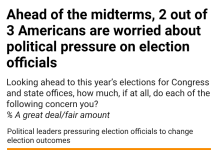
CHART OF THE DAY


WHAT THEY SAID
LISA RUBIN ON THE DOJ’S WEAPONIZATION FUND ORDER
“Nothing that Todd Blanche did yesterday eviscerates or even modifies that settlement agreement. This is really nothing more than me scribbling something on a napkin, handing it to you, and you saying that it has the force of a binding written order.”
JONATHAN MARTIN ON MICHIGAN
“It’ll still be the same fight in the 2060s — the Bernie vs. Hillary proxy war. It hasn’t changed. But the bottom line today is that Abdul El-Sayed is the superior candidate who ran a superior campaign, and that shows. The deeper issue is that winning a primary is fine, but you’ve got to win a general in a battleground state like Michigan.”
VOTING IS ON IN MICHIGAN, KANSAS, MISSOURI, VIRGINIA, AND WASHINGTON. HERE’S WHAT WE’RE WATCHING.
- In the Michigan Senate Democratic primary, Rep. Haley Stevens, who represents the party establishment, is facing a strong challenge from progressive candidate Abdul El-Sayed. Democrats see the race as the night’s biggest test of how much support the progressive movement is gaining this election cycle.
- In Missouri, another progressive Democrat is on the ballot. Former Rep. Cori Bush wants her district to send her back to the House as she runs against the incumbent who knocked her out of her seat in the last Democratic primary.
- Kansas is a vulnerable state for Democrats, with Gov. Laura Kelly reaching the end of her second and final term. Republicans have a chance to reclaim the governor’s office after eight years of Democratic control. Kelly’s chosen successor, state Sen. Ethan Corson, has struggled to distinguish himself from his Democratic rivals, while the state’s Republican Party has shifted toward the MAGA movement after shedding much of its moderate wing.
- Tonight’s results in Virginia’s 2nd Congressional District could set up a rematch between Republican incumbent Rep. Jen Kiggans and former Rep. Elaine Luria, a Democrat who served on the House Jan. 6 committee before losing her seat to Kiggans in the 2022 midterms.
Keep up on MS NOW.
The post What RFK’s 1968 campaign can teach today’s Democratic Party appeared first on MS NOW.