On Tuesday the Trump administration officially published in the Federal Register what may be a mortal blow to the Endangered Species Act, the key law that aided the spectacular recovery of birds like the bald eagle and the peregrine falcon. The administration’s new rule, which was issued by the Interior and Commerce departments and becomes effective Sept. 14, deletes a critical definition of what constitutes “harm” to species on the brink of extinction.
Under the old definition, harm wasn’t limited to actions that directly killed or injured wildlife. Developers, industrial polluters and landowners were also prohibited from rolling out bulldozers and backhoes and causing “significant habitat modification or degradation” that damaged or destroyed endangered species’ “breeding, feeding or sheltering” areas.
There is a whole world of lesser-known toads, salamanders, turtles, bees, butterflies and fishes that could blink out before we know it.
There are 2,300 species listed under the Endangered Species Act. Some of the more widely known species are the northern spotted owl, the California condor, the Florida panther, the whooping crane, the manatee and some species of wolves. But there is a whole world of lesser-known toads, salamanders, turtles, bees, butterflies and fishes that could blink out before we know it.
It is obvious who benefits from this outrageous change. Oil and gas drillers, building contractors, mining companies, road construction groups, ranchers and the U.S. Chamber of Commerce have all chafed at the appropriately broad interpretation of “harm.” In one statement, the Independent Petroleum Association of America claimed the Endangered Species act was “destroying economic growth and job creation.” In a bald-faced press release hailing the change, Interior Secretary Doug Burgum called the old rules a “regulatory trap.” The new ones, he said, will “reduce unnecessary permitting, cut compliance costs, and eliminate confusion for landowners, small businesses, energy producers, farmers, ranchers and local governments.”
Now it is wildlife that will be confused, trapped and possibly exterminated with unfettered development. Environmental groups are suing the administration, but the odds of blocking the new rule are long given our ultraconservative Supreme Court, which has robotically rolled back even environmental protections that have a direct impact on wildlife.

In 2023 the Supreme Court drastically limited the definition of a wetland. In more sane days, the Environmental Protection Agency called wetlands a “biological supermarket.” More than one-third of all the nation’s endangered and threatened species live full time in wetlands, and more than half of such species spend some time in them.
The court ruled against a generous definition of a wetland even though between 2009 and 2019, according to the Interior Department under the Biden administration, the nation lost an area of vegetated wetlands larger than the size of Rhode Island. By the way, groups that filed briefs to reduce the scope of wetlands included agricultural interests, mining interests, the U.S. Chamber of Commerce, the American Petroleum Institute, and the National Association of Home Builders.
This latest rule is a neon green light inviting developers to plow through the wetlands that are left, cut down more forests, build along sensitive coastlines, cast fishing nets into precious feeding grounds for migratory birds and whales, and dump more pesticides and chemicals. The rule is changing despite many studies showing that the biggest threat to threatened creatures is, in fact, habitat loss. Globally, a 2022 study found that habitat destruction affects 9 of 10 species threatened with extinction. In the United States, a 2019 study published in the journal Conservation Science and Practice found that habitat modification was the most common threat to species listed under the Endangered Species Act. The study said current federal and state regulations “are not adequate enough to prevent habitat loss.” Yet the Trump administration has set up the nation to accelerate the loss.
I am writing and photographing on islands where one of the lesser-known endangered species, the roseate tern, nests.
On the day the administration posted the rule change, I was, to borrow from Otis Redding, literally sittin’ on the dock of the bay, watching these protections roll away. I am writing and photographing on islands where one of the lesser-known endangered species, the roseate tern, nests. It is a beautiful bird with sharp, elegant plumage. Like most tern species in North America, that plumage made them a target for gunners in the late 1800s and early 1900s to provide feathers for women’s hats. Even with federal protections, the tern population grew back slowly, partially because of habitat loss in the 20th century.
They are long-distance migrants that zoom from the Northeast to South America for the winter. But before they get there, most roseates make a major pit stop on Cape Cod. They roost at night on strips of beaches and sandbars. “It’s an area for parents to refuel after spending the summer raising their young, and it is a training ground for young, inexperienced birds to work on their hunting skills,” said Don Lyons, director of conservation science at the National Audubon Society’s Seabird Institute, based in Bremen, Maine.
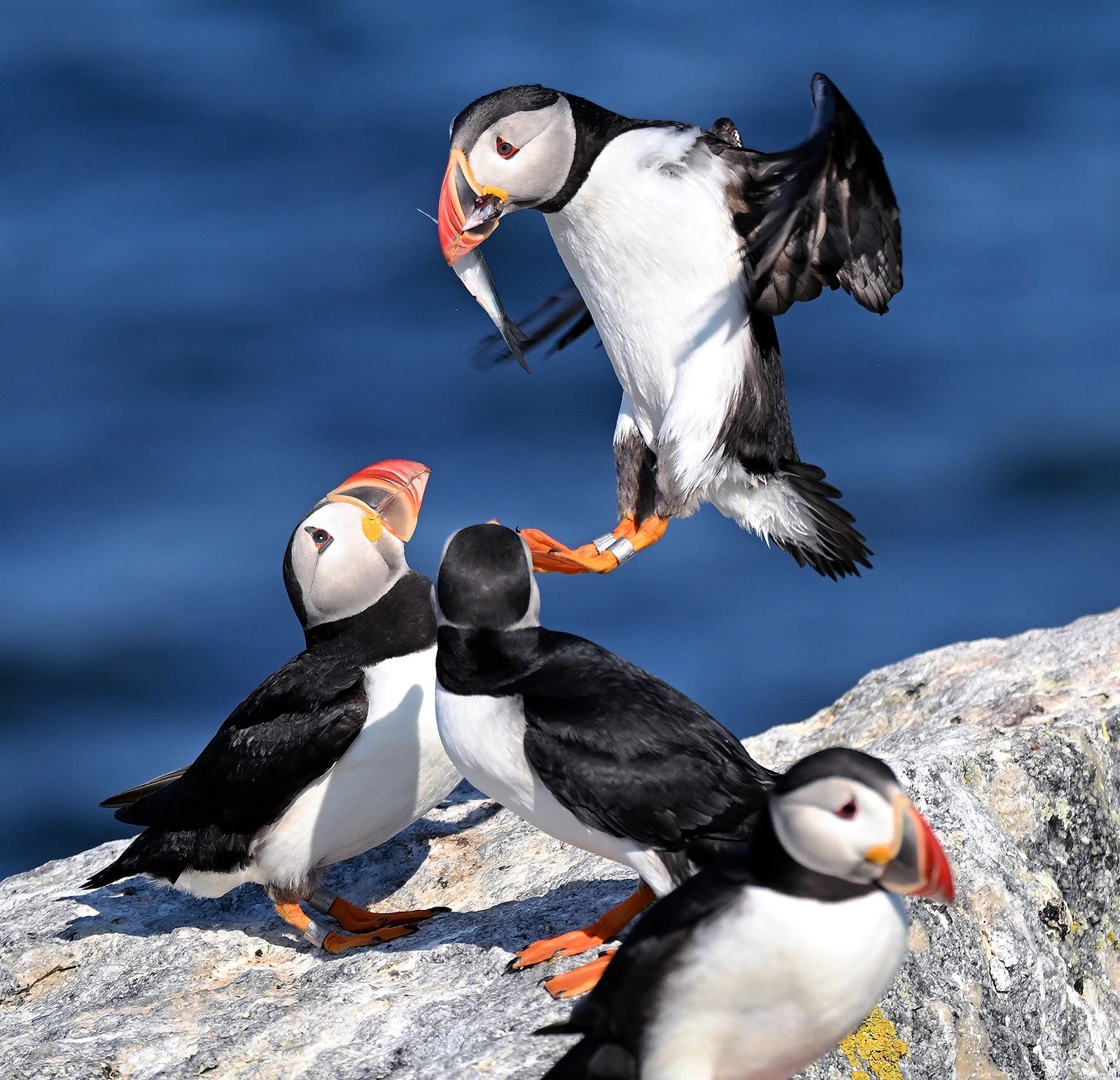
The institute is an outgrowth of Project Puffin, which restored Atlantic puffins to islands in Maine after hunting caused about a century’s absence of the birds. I am the co-author, with the project’s founder, Steve Kress, of two books on that restoration.
A single change to the ESA could leave endangered wildlife with fewer protections. Since 1975, the word “harm” has included destroying or degrading the habitat wildlife needs to survive. A new federal rule removes habitat destruction from that definition.
Read more: https://bit.ly/4fydsIj
— Wolf Conservation Center
(@nywolforg.bsky.social) 2026-07-13T18:48:37.112428341Z
Lyons said he was not aware of any major planned development on the Cape where the roseates go, but he warned that all coastal areas where birds either nest, rest or winter are at major risk of many threats with increased development. “More people also mean more raccoons, skunk, coyotes, dogs and domestic cats that could predate on the birds,” he said.
Lyons, who himself migrates to Oregon State University every fall to be a seabird science professor, talked about another bird on the West Coast that is not a household name: the marbled murrelet. It is a small, blocky cousin of puffins seen in Pacific waters. The marbled murrelet, which is listed as threatened in Washington, Oregon and California, is one of the most mysterious and difficult seabirds in North America to study, Lyons said. Unlike many seabirds that nest in dense, noisy colonies, the marbled murrelet flies from the ocean into dense, dark old-growth coastal forests to nest in solitude on the branch of a redwood or Douglas fir, hidden by the tree canopy.
The bird is such a recluse that the first murrelet nest was not discovered until 1974 — and only then by a maintenance worker who was climbing a redwood in a state park. The bird’s breeding habits make it a potential casualty for developers or loggers who could easily claim they didn’t know the bird was in a tree they just cut down. Even if a developer missed a tree with a nest, any thoughtless fragmenting of the forest could allow easier access for nest predators, such as jays, ravens, crows, owls and hawks. According to a Washington state wildlife report last year, nesting habitat losses due to logging have been so “substantial” that the state population of marbled murrelets fell from 7,500 birds in 2015 to 4,400 in 2023.
If puffins nested in trees, we’d probably do a better job of protecting trees.
Don Lyons, director of conservation science at the National Audubon Society’s Seabird Institute
“They’re susceptible to habitat loss because they’re a specialized bird in a resource that has real economic value to people,” Lyons said. He said the bird was symbolic of many species that do not have much of a constituency outside of the conservationists who study them. “They don’t have the charisma of other birds,” Lyons said. “If puffins nested in trees, we’d probably do a better job of protecting trees.”
My colleague Kress, the man who brought puffins back to two islands in Maine, starting in the 1970s with chicks translocated from Canada, said the Trump administration’s elimination of habitat protections was particularly egregious. It was only in the last 15 years that the wintering home of Maine’s puffins started to be understood. As it turned out, some puffins spend the late winter in the Northeast Canyons and Seamounts, 130 miles southeast of Cape Cod.
Because of its wealth of deep-sea corals, and terrain that concentrates nutrients and smaller fish for terns, puffins, turtles, dolphins, rays, sharks and whales, President Barack Obama declared the area a national marine monument in 2016, closed to commercial fishing and oil and gas drilling. This year, Trump reopened the monument to commercial fishing. In a press release touting the potential bounty of tuna, swordfish, mackerel, squid and red crab, Commerce Secretary Howard Lutnick said, “Restoring fishing in the Northeast Monument sends a signal that our fishermen are valued in the United States.”
To Kress, the signal is that wildlife no longer has a value. “This is a case of actively causing a species to decline and disappear,” he told me. “This is not a case of mere neglect. You don’t have to kill a bird to harm it. Take habitat away, they’re doomed.”
The post Changing the meaning of ‘harm’ in the Endangered Species Act will harm endangered species appeared first on MS NOW.