Connecticut Rep. John Larson has been in the U.S. House since before the turn of the 21st century.
A lengthy career in a reliably blue district like this would normally become a safe path to continue serving in Congress. But not this year, when a growing anti-incumbent fervor seems to be gripping the country, dealing blows to Democratic House members and Republican senators alike during a bruising primary season.
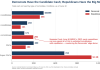
So far this year, 10 House members — seven Democrats and three Republicans — along with two Republican senators have fallen, for a total of 12 defeated incumbents.
So far this year, 10 House members — seven Democrats and three Republicans — along with two Republican senators have fallen, for a total of 12 defeated incumbents.
The latest to lose is Larson, who turned 78 years old last month. Larson was defeated in his Democratic primary by Luke Bronin, who is decades younger and the former mayor of Hartford.
“If we are going to fix this mess that we are in, we need to build a Democratic Party that is bringing a whole new energy to this fight,” Bronin said to an energetic crowd in Hartford, according to The Associated Press.
He said if the party won’t adapt, “then the changes are going to come from the ground up. And that’s a message the party needs to hear.”
That loss, coming after a reckoning within the Democratic Party about age highlighted by Joe Biden’s presidency as the then-oldest president ever, points at a generational tension between the party’s senior statesmen and a younger, frequently more partisan class of candidates who generally want to fight President Donald Trump more aggressively. Some of the winners belonged to the democratic socialist wing of the party in places such as New York, Michigan and Colorado, where they knocked off incumbents of varying tenures.
Losses by two of the incumbent Democrats earlier this year, Al Green and Julie Johnson in Texas, were brought about by the GOP mid-decade redistricting effort that’s expected to help Republicans gain seats in the red state this fall.
But losses by lawmakers haven’t just been confined to Democrats. For Republicans, tangling with Trump threatens to bring peril. The president seemed to seal the fate of two Republican senators — John Cornyn of Texas and Bill Cassidy of Louisiana — by eventually endorsing their opponents.
An early surprise came in March when Texas Republican congressman Dan Crenshaw lost to state Rep. Steve Toth in a contest that became surprisingly perilous for the incumbent as he was challenged from the right flank of the Texas GOP.
In the weeks and months that followed, Kentucky GOP congressman Thomas Massie’s standoffs with Trump cost him his future in the House. Meanwhile, Cassidy’s vote to convict Trump in the impeachment trial following the Jan. 6, 2021, attack on the U.S. Capitol helped galvanize opposition against his re-election run on the Republican side.
Cassidy’s loss marked the first time an incumbent senator who had won an election to his statewide seat lost a primary since 2012, when Indiana’s Richard Lugar was ousted. Cornyn joined that same group as Cassidy later in May when he lost a runoff to controversial state attorney general Ken Paxton after Trump sided with the latter instead.
Democratic incumbents have had a rough stretch of their own in the House this year. Before Larson’s loss Tuesday, four Democratic incumbents had lost their primaries in reliably blue districts in cities including Denver, Detroit and New York to more liberal opponents, many of whom identified with democratic socialism.
Controversial Tennessee GOP congressman Andy Ogles also lost in a primary last week, as the state’s own sitting governor endorsed against him on the Republican side. The defeat was another sign of how fragile incumbency can be in these turbulent political times, though political baggage comes with its own potential partisan consequences.
This is by no means the first cycle in which incumbents have had a rough time of facing their own political bases. What this year has shown, however, is a willingness to toss out what’s known and embrace what feels new.
Voters in both parties have had a distasteful view of Washington and Congress as of late, with some members struggling in runs for higher offices or attempts at winning prominent new roles. The throughlines for the incumbents who have lost their primaries this year aren’t universal. But there are strains of voter animosity toward how things are going at a time when what’s normal in politics continues to be tested, tried and tossed aside.
The post A veteran Democratic congressman lost Tuesday. He’s not the only one to go down this election cycle. appeared first on MS NOW.