On the morning of March 13, Mohammad Nazeer Paktiawal was preparing to take his children to school when federal immigration officers arrived at his home in Richardson, Texas.
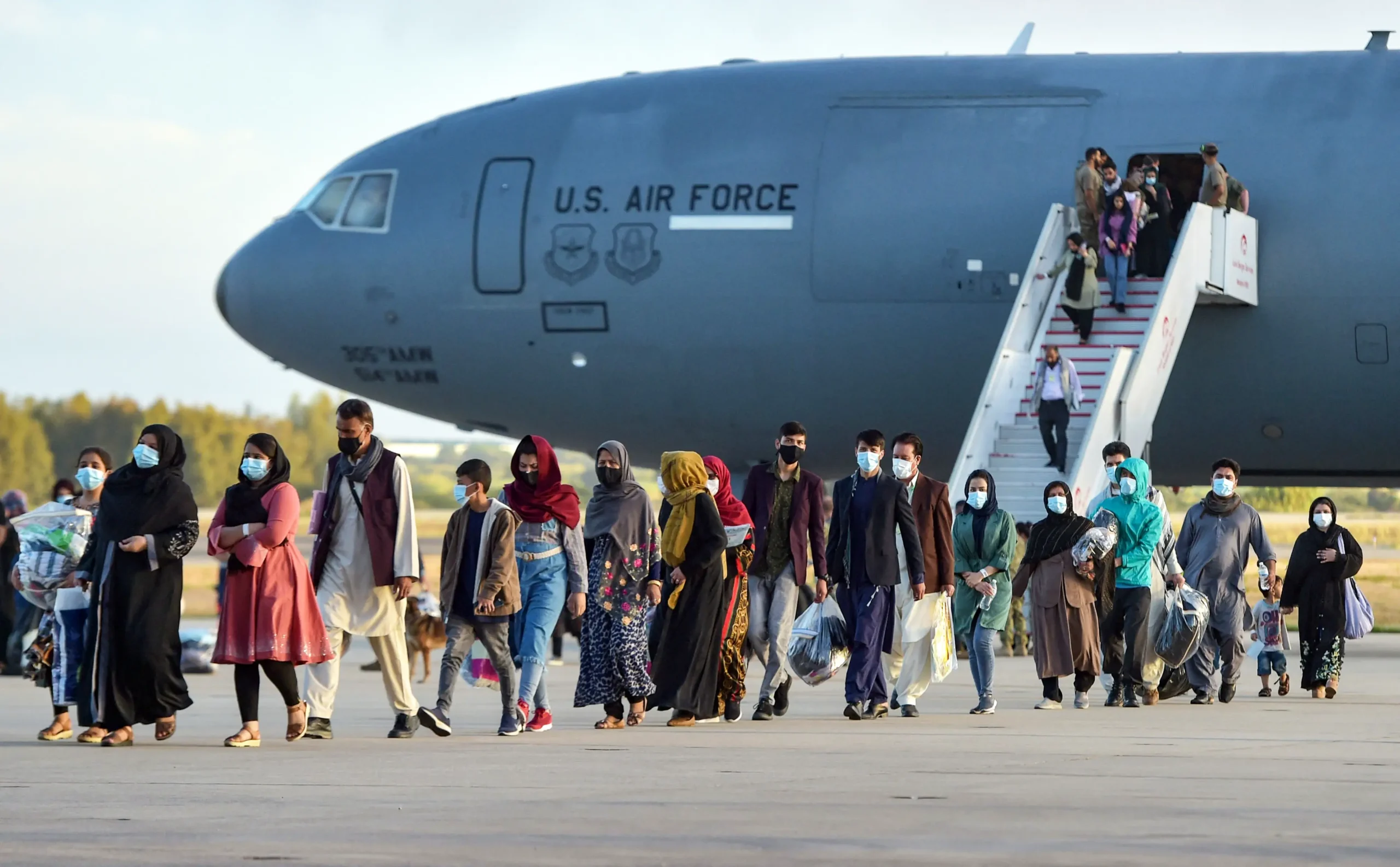
Paktiawal was not unknown to the U.S. government. He fought alongside U.S. Special Forces in some of Afghanistan’s most dangerous terrain. After the Taliban returned to power, the United States evacuated him and his family in 2021 through a legal process established for Afghans endangered by their association with our country. He applied for asylum. His case was pending, and he was following the rules the U.S. imposed on him to keep him safe and provide him with legal status for his work on our country’s behalf.
Immigration and Customs Enforcement arrested him anyway.
Less than 24 hours later, the 41-year-old father of six was dead.

Paktiawal’s death certificate says an unidentified substance caused an allergic drug reaction, triggering anaphylaxis and worsening his asthma. His relatives say ICE officers would not take the inhaler his wife tried to give them. The government cited two arrests in 2025, for theft and food stamp fraud, as why ICE moved to detain Paktiawal, but he had not been convicted of either allegation. His family is seeking the full autopsy and a complete explanation of what happened between the moment he was taken from his children and the moment he died.
In 2015, I served in Afghanistan as a Navy intelligence officer supporting Afghan and coalition forces. I remember the incoming fire, the constant concern about insider threats — and living with the knowledge that every movement outside a secured compound depended on people who understood the language, terrain, tribal dynamics and dangers better than we ever could.
Our Afghan partners were essential to the American mission.
They interpreted conversations in which a misunderstood word could get someone killed. They warned us about threats we could not see. They entered villages ahead of us, stood beside American service members under fire and placed their families at risk.
We owe them our lives, and we told them that the United States does not abandon its friends.
Today, that promise has been broken — not only in Kabul but in American homes, immigration offices and detention facilities across this country.

A former Afghan interpreter named Zia was detained last July outside a U.S. Citizenship and Immigration Services, or USCIS, office in East Hartford, Connecticut, immediately after attending a biometrics appointment connected to his pending green card application. Zia had entered the United States legally under humanitarian parole and had a pending immigration case. His records included letters and certificates from U.S. Army units documenting his service. Sayed Naser, another Afghan who said he had aided American forces, was taken into custody last year after attending a routine asylum hearing in San Diego.
Also in Connecticut, immigration officers arrested an 18-year-old high school senior named Rihan in April while attempting to locate his father, a former interpreter for U.S. forces in Afghanistan. According to court filings, officers told Rihan that his humanitarian parole had expired, but the government later corrected its records to reflect that his parole was valid through October 2026. Despite that correction, Rihan was shackled, transferred to a detention facility in Massachusetts and held for more than two weeks before a federal judge ordered his release. His family’s asylum case remains pending.
These are not isolated administrative errors. They form part of a policy that increasingly treats lawful presence, humanitarian parole, pending asylum applications and faithful compliance with government appointments as inconveniences rather than facts to be weighed. An estimated 1.8 million immigrants have had their lawful status revoked during this administration.
Years after my tour in Afghanistan, I served as ICE’s chief of staff. I believe in immigration enforcement.
The administration has ended Temporary Protected Status for thousands of Afghans, exposing people living and working here to the possibility of removal to a country controlled by the Taliban. United Nations officials have urged governments to halt involuntary returns to Afghanistan, where former officials and security personnel continue to face killings, disappearances, torture and arbitrary detentions.
None of this means that an Afghan’s wartime service should provide immunity from American law.
Years after my tour in Afghanistan, I served as ICE’s chief of staff. I believe in immigration enforcement. Individuals without legal immigration status who pose genuine threats to national security or public safety should be investigated, arrested and, when the law requires, removed. Allegations of criminal conduct should be examined fairly and individually.
But an arrest is not a conviction. An asylum application is not an attempt to evade the law. Showing up for a hearing or an immigration appointment is not evidence of dangerousness. And civil immigration detention should never be used as punishment for people who have followed government instructions.
Effective law enforcement requires good judgment. It distinguishes a national security threat from a paperwork problem, a violent offender from a high school student, a fugitive from a father reporting for a scheduled appointment. When those distinctions disappear, enforcement becomes indiscriminate — and makes our country less safe.
It encourages immigrants to avoid courts, check-ins and law enforcement officers. It destroys trust that investigators need to identify trafficking, terrorism, smuggling and other violent crime. It consumes detention space, officer time and taxpayer dollars that should be directed toward actual threats.

This approach bears the unmistakable imprint of Stephen Miller, the White House deputy chief of staff for policy and homeland security adviser, who drives the administration’s immigration agenda.
Miller’s hostility toward Afghan resettlement has been public for years. During the collapse of Kabul in 2021, as American veterans were desperately trying to evacuate their former interpreters and partners, Miller said on Fox News that resettling Afghans was intended “to change America.”
That is the worldview behind these policies. Afghan allies are not evaluated as individuals or even principally as security cases. They are treated as instruments of demographic and cultural change — as members of a suspect population whose presence is the offense.

That worldview is profoundly at odds with the military values in whose name America sent me and millions of others to war.
The Navy taught me honor, courage and commitment. Navy doctrine calls on us to treat every person with human dignity and to show respect without regard to race or religion. The Army defines respect as treating people as they should be treated, and honor as doing what is right, legally and morally.
Those principles are not sentimental decorations for recruiting posters or retirement ceremonies. They are commitments. They matter most when keeping them is politically difficult.
After World War II, the United States ultimately admitted roughly 400,000 displaced people and ethnic German refugees under the Displaced Persons Act. After the fall of Saigon in 1975, approximately 131,000 Vietnamese and Cambodian refugees entered the U.S. refugee system within months. By the end of 1979, roughly 300,000 refugees from Vietnam, Laos and Cambodia had been admitted to the United States.

Those decisions were controversial. Refugees from postwar Europe and Southeast Asia encountered suspicion and prejudice, with opponents warning that admitting large numbers of newcomers would strain the economy, threaten American jobs and fundamentally change the country.
They did change America. They became American.
They built businesses, raised families, joined the military and enriched their communities. Our country was strengthened by welcoming people who understood, perhaps better than most, the value of freedom and the cost of losing it.
Our Afghan partners were essential to the American mission. We told them that the United States does not abandon its friends. Today, that promise has been broken — not only in Kabul but in homes, immigration offices and detention facilities across this country.
Afghanistan is our generation’s test of this principle. But this time the abandonment is occurring slowly — one detention, one revoked protection and one broken family at a time.
The administration should immediately review the detention of Afghan parolees and asylum applicants and release those who present no individualized threat. It should restore enforcement discretion, establish a reliable process for verifying wartime service with the Defense Department and military veterans, and provide Congress with a full accounting of Afghans detained or removed despite pending protection claims. Congress should create a durable path to legal status for Afghan partners and their families.
The government must also release the complete findings surrounding Mohammad Nazeer Paktiawal’s death. His wife and children deserve the full truth.
But this is about more than one family.
Somewhere, someday, an American service member will again ask a local interpreter, intelligence officer or soldier to step outside the wire with us. That person will have to decide whether the United States can be trusted — not only during the battle but after it.
People know what happened after Vietnam and after Kabul. More and more people may even know what happened to Mohammad Nazeer Paktiawal.

These stories tear at my heart because they suggest that our country has learned too little from the wars it asks others to fight beside us. My story is like that of millions of Americans whose families have served across generations. I was raised by a grandfather who earned a Purple Heart in Europe during World War II and lived with the legacy of that war for the rest of his years; I grew up inspired by relatives who served with valor, part of a family that has sacrificed in nearly every war this nation has fought.
Those experiences instilled values shared by veterans and military families across the political spectrum: honor, duty, loyalty, sacrifice and the obligation to stand by those who stood with us.
I still carry anger over how we left Afghanistan and the promises our country failed to keep in that departure. To see that abandonment compounded by the arrest and mistreatment of Afghans who trusted our word and served alongside Americans is heartbreaking. This is a failure not only of immigration policy but also of national memory, military honor and the basic obligation to stand by those who stood by us.
America’s promises are part of our national power. Once broken, they cannot be restored by a speech or a flag-draped ceremony.
I believe in enforcing our immigration laws. But enforcement without judgment is not strength. Power exercised without honor is not security.
Miller may call his vision “America First.” But arresting those who put America first when our troops needed them most is not patriotism. It is betrayal.
The post Stephen Miller’s immigration policy for Afghans isn’t ‘America First.’ It’s a betrayal. appeared first on MS NOW.