This week, the final California-bound tanker that sailed out of the Middle East before the U.S. war with Iran shut down that supply slipped up to the coast off Los Angeles, carrying crude oil that the state counts on as part of its energy mix.
A mile-and-a-half from the beach, the ship discharged its contents into underwater pipes feeding a sprawling Chevron refinery in El Segundo and sailed away, setting off a precarious time for the state that’s home to nearly one in eight U.S. drivers. Long accustomed to the highest gas prices in the nation, Californians now find themselves facing the real prospect of $7-a-gallon fill-ups, or worse.
Caught in a slow transition from fossil fuels to renewables, cut off geographically from the pipeline network that feeds most of the rest of the country and handcuffed by a century-old law, California imports roughly 60% of its crude oil from overseas. About 20% traditionally came from the Middle East.
For now, none of it does.
Knowing the final tanker had unloaded “gave me pause for a moment, because that’s a significant milestone that I’ve not seen or faced in my 27-year career,” Chevron El Segundo CEO Bryon Stock told MS NOW the next day at the refinery, one of the largest on the West Coast.
Even if tanker traffic resumes at previous levels through Strait of Hormuz tomorrow, it will be months before any of that oil makes it halfway around the world to California, which also imports significant amounts of refined fuel, including a quarter of its gasoline and 20% of its jet fuel. Much of that refined product comes from Asia, where refineries are now facing crude shortages and delayed supply themselves due to the U.S. and Israeli war with Iran.
Industry leaders warned for months that a supply gap was coming. According to California energy officials and refinery executives, that gap has now begun.
“This refinery typically would receive around 20% of its crude from the Arab Gulf, and today we’re not able to do that,” Stock said.
Immediate effects
The consequences are already being felt. The Chevron El Segundo refinery alone helps fuel roughly one out of every four vehicles in Southern California and supplies nearly a third of the jet fuel used at Los Angeles International Airport, Stock said. It is one of the most critical energy hubs on the West Coast. Losing even part of its supply chain places enormous pressure on the system.
That risk is becoming more severe because California has steadily lost refining capacity.
Two major refineries, Phillips 66 in Los Angeles and Valero in Benicia, have either shut down or announced plans to close in recent years, part of California’s broader transition away from fossil fuels. The state’s refining system has become smaller, tighter and less flexible at the exact moment global energy markets are becoming more volatile.
Chevron CEO Mike Wirth recently warned that “the shock absorbers are being drained out of the system,” describing an increasingly fragile market where supply keeps tightening while the ability to replace it becomes harder by the day.
“That increases the likelihood of volatility,” Wirth said in an interview with CBS News.

California’s vulnerability did not happen overnight. The roots of the problem stretch back more than a century.
In 1920, following World War I and growing concerns about American maritime independence, Congress passed the Merchant Marine Act, better known today as the Jones Act. The law requires goods shipped between U.S. ports to be transported on ships that are American-built, American-owned and American-crewed.
The intention was national security and economic protection. The United States wanted to preserve a strong domestic shipping industry and ensure foreign vessels would not dominate American ports or supply chains during future conflicts. But over time, the economics shifted.
Operating American ships became dramatically more expensive than using foreign vessels. Labor costs rose. Shipbuilding costs exploded. Today, shipping oil from Texas or New Jersey to California on Jones Act-compliant vessels can cost significantly more than importing oil from overseas.
The result is one of the most unusual energy realities in America: California can sometimes buy oil from Asia or the Middle East more cheaply than from the United States itself.
The Jones Act has occasionally been waived during emergencies, including recent disruptions, but those waivers are temporary, and even when they happen, they aren’t always enough to stabilize supply.
A green future, a fossil-fuel present
For now, California and much of the U.S. are leaning more heavily on oil from Western Hemisphere countries like Canada, Mexico, Brazil and Venezuela. But with Middle Eastern crude disrupted, global demand shifts to a smaller pool of available suppliers, giving those countries more leverage to raise prices. Add in longer shipping routes, limited refinery flexibility, and growing competition from other nations scrambling for the same barrels, and the temporary workaround could ultimately drive fuel costs even higher.
At the same time, California has aggressively pursued one of the most ambitious climate agendas in the country.
The state enforces strict low carbon fuel standards, cap-and-trade emissions rules, specialized gasoline blends, and complex environmental permitting requirements that make refining fuel in California significantly more expensive and complicated than in most other states.
Oil companies also face high taxes, elevated labor costs and mounting regulatory fees.
California leaders argue those policies are necessary to transition away from fossil fuels and combat climate change. The state has set goals of 100% clean electricity and a roughly 91% reduction in oil demand by 2045. Billions of dollars have been invested into climate initiatives, renewable energy expansion and carbon neutrality programs.
Advocacy groups and Democratic lawmakers have celebrated California as a national leader in clean energy transformation. But critics argue the transition is moving faster than the infrastructure needed to support it. And now, California appears trapped between two systems. The old one is shrinking. The new one is not fully ready.
“Being reliant on global supply chains to be able to meet dynamic needs of a market like California is risky,” Stock admitted.
That risk is no longer theoretical. It is visible at gas stations and airports, and in the tankers lined up along the coast carrying crude from farther and farther away. State officials and industry leaders acknowledge the danger of California’s isolation, but they disagree sharply about who is responsible.
Asked whether California was unprepared for this moment, Gov. Gavin Newsom blamed the Trump administration and the conflict overseas.
“Every American who fills up their tank this week, buys groceries, or books a flight is paying Donald Trump’s Iran war tax,” Newsom said in a statement to MS NOW.
“He started the Iran war with no plan, and it is clear he has no plan to end it either. Sixty-one days in, American families are still waiting for relief and still getting nothing from the Trump administration and Republican-led Congress. It’s shameful.”
Republicans and oil industry leaders argue California’s own policies created the conditions for the crisis by discouraging domestic production, shrinking refining capacity and making energy infrastructure nearly impossible to expand.

Consumers are caught in the middle.
“It’s getting crazy. It’s like, insane,” driver Lisa Elisareal said at a gas station not far from the Chevron refinery. “Like, I don’t even get full tanks anymore, because I’d rather not.”
California is pushing aggressively toward a clean energy future while still deeply dependent on oil in the present. Electric vehicles are growing. Renewable energy projects are expanding. Climate goals are accelerating.
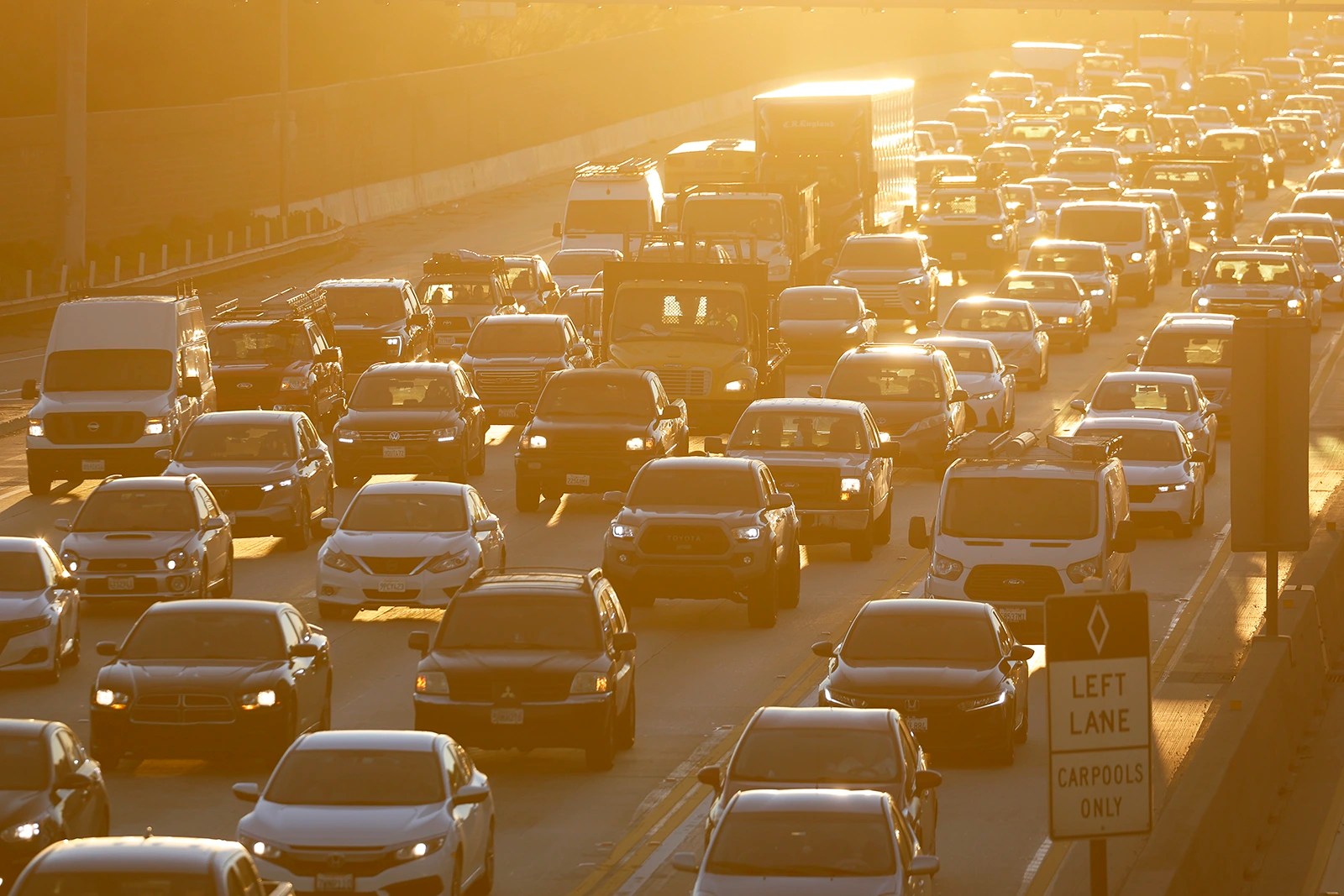
But millions of Californians still drive gasoline powered cars to work every day. Planes still need jet fuel. Cargo still moves on diesel.
And all of that just got harder to find.
The post Hormuz shutdown puts California on the brink of an oil crisis appeared first on MS NOW.