

On Tuesday, the Senate Banking Committee is set to hold a confirmation hearing for Kevin Warsh, President Donald Trump’s nominee to chair the Federal Reserve. Much reporting ahead of the hearing has focused on Sen. Thom Tillis, R-N.C., who says he won’t vote to advance Warsh out of the committee until the Trump administration calls off the Justice Department’s groundless criminal inquiry into the current Fed chair, Jerome Powell.
Trump very much wants to replace Powell — and Warsh would very likely be confirmed by the full Senate shortly after making it out of committee. So the extent to which the president can’t get out of his own way is remarkable. But on the eve of Warsh’s confirmation hearing, I’d like to suggest a question to gauge the most important and potentially worrisome aspect of this nomination: Warsh’s independence from the White House.
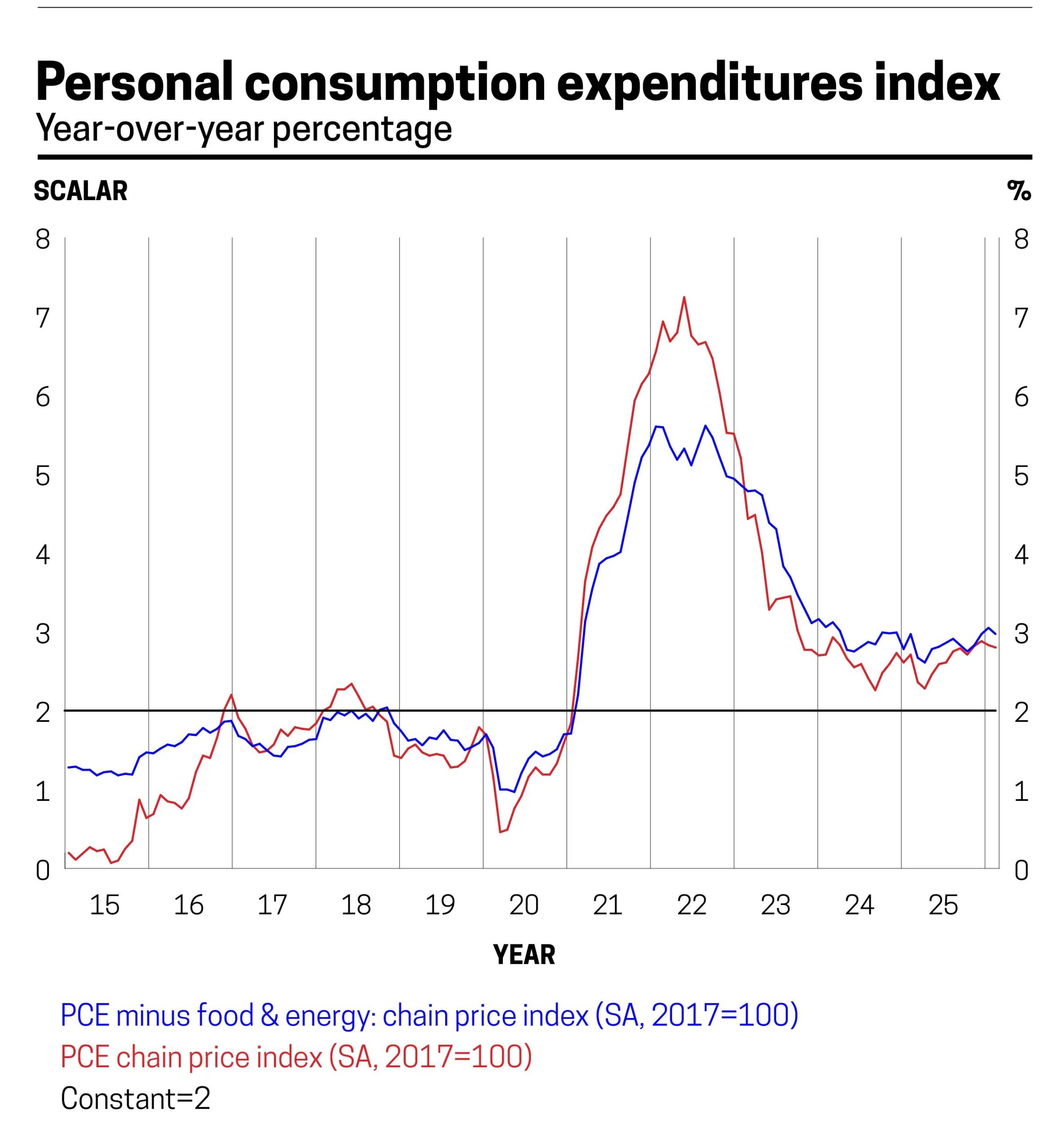
For five years, inflation has been above the Fed’s 2% target. The figure below shows inflation for personal consumption expenditures, known as PCE, going back to 2015. That figure is the Fed’s preferred gauge because, in the words of its board, PCE “more quickly adapts to changes in spending patterns.” The chart below includes both headline PCE and “core” PCE (which excludes more volatile food and energy prices) plus a line at the 2% target for context.

Fed officials say — and I suspect they’re largely correct — that the current excess over target is because of Trump’s tariffs, which so far have been found to raise inflation by just under a percentage point. Like any other tax, tariffs should cause a one-time increase in prices, but then inflation should settle back down to its underlying rate, as long as the government doesn’t add any additional tariffs. Therefore, as Powell often says, the Fed doesn’t need to raise rates against this persistently higher inflation.
That’s the theory, at least. On the other hand, many of the tariffs have been imposed for at least a year, yet the inflation rate is still elevated. And now the war with Iran has introduced new price pressures to worry about. Given these circumstances, Fed officials have been clear that their best play is to take a beat and neither raise nor cut for a while.

With that background, here’s the question senators should ask Warsh:
Inflation has been above the Fed’s target for five years, with core PCE inflation running at about 3% for the past three months — a full point above the Fed’s target. Fed officials have said this excess inflation is due to tariffs, and thus they expect this excess pressure to fade. Do you agree that this excess inflation is due to tariffs?
If Warsh says yes, it’s a good sign that a) he lives in some version of the real world, and b) he’s willing to speak truth to power, a positive sign for independence. Remember, the White House has long resisted this admission.
If Warsh denies this fact or wiggles around it, here’s the follow-up question: “If the excess over target is not tariffs, what do you think it is? And if it’s not tariffs, wouldn’t it be reckless to cut interest rates at this point?”

This is the key point. The Fed can “look through” allegedly one-time inflationary effects of tariffs. But if something more structural, or lasting, is keeping inflation above target, then that suggests rates should not be cut. Should Warsh both deny the tariffs’ impact and argue for cutting rates right now — like Trump’s most recent nominee to the Federal Reserve Board, Stephen Miran — he’s signaling that he’s likely to do Trump’s bidding, Fed independence be damned.
I understand Warsh has to be mindful that Trump is watching him closely. But the stakes here are incredibly high, and the members of the banking committee must probe as deeply as they can to determine what lengths Warsh will go to in order to please the president. This line of inquiry would assess the extent to which Warsh is willing to signal to senators, markets and the rest of us whether he is ready to stand up to Trump and maintain Fed independence — or whether he should be widely opposed as fulfilling Trump’s long-standing desire for a puppet as the head of the Fed.
The post The one question Trump’s Fed chair nominee must answer appeared first on MS NOW.

