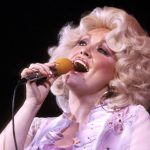
I don’t have a first memory of seeing Dolly Parton any more than I have a first memory of tasting cornbread or hearing the sound of my own mother’s voice. Dolly seemed to have always been there — a monument in the Southern landscape I was raised in, a thread in the quilt of my life.
But not even Dolly could last forever. The legendary songwriter, musician, actress and humanitarian born in a log cabin in the hills of Tennessee passed away Tuesday at 80 years old.
Dolly seemed to have always been there — a monument in the Southern landscape I was raised in, a thread in the quilt of my life.
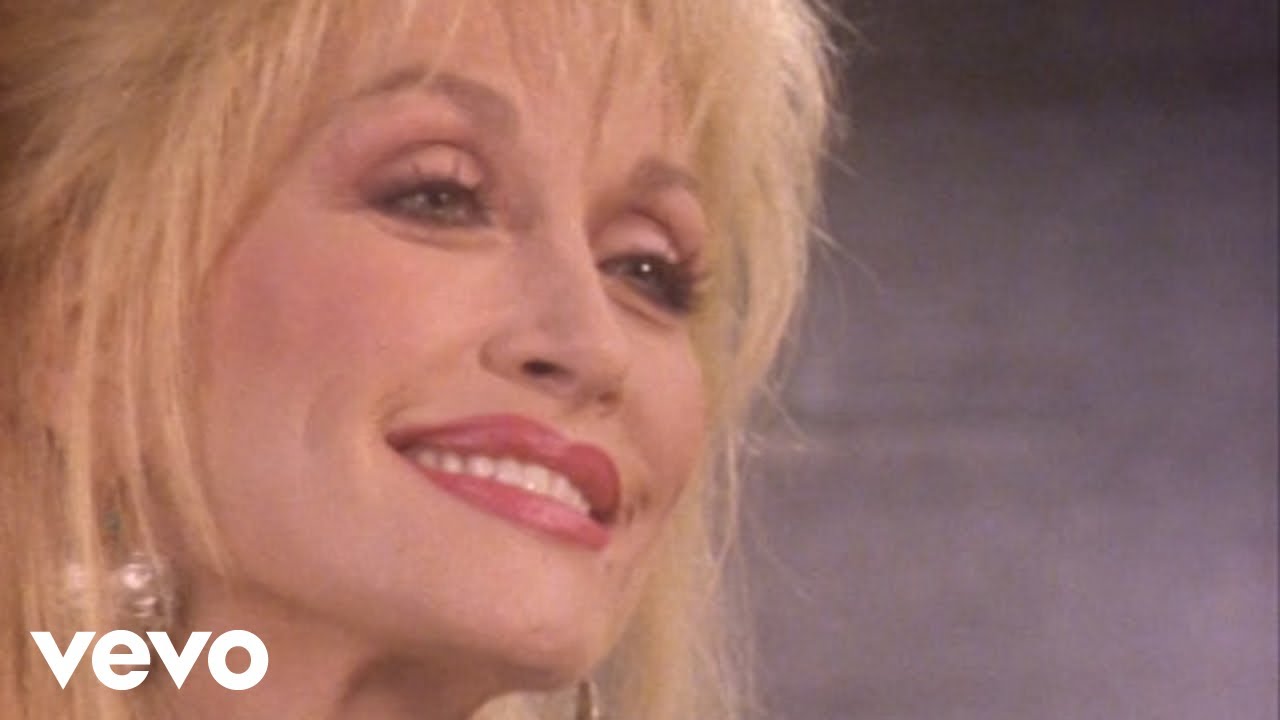
In her 1991 song, “Silver and Gold” she reminded us that nothing lasts. I watched that video from the floor of our trailer in the mountains of eastern Kentucky on a wood-paneled TV. In it, Dolly sits on the porch of a rough lumber shack playing her guitar and singing about how love is more precious than money and how we can’t buy back time. She shared my Appalachian accent and values — both often derided in America as laughably folksy — and yet she presented them with a glitter-covered, glamourous self-love that permitted even the most world-weary folks to hear her.
This was the magic of Dolly Parton, who released her first album almost 59 years ago and reached No. 1 on the Billboard Top Album Sales chart as recently as December 2023.
Her career of singing simple truths with big blonde hair and acrylic nails included a Grammy Lifetime Achievement Award, induction into the Country Music Hall of Fame and the Kennedy Center Honors, where she watched in tears as every major country music artist showered her with love. Reba McEntire teared up telling her that her best gift was making “everyone feel like they’re the only one in the room,” a sentiment often repeated about Dolly, whose humility has been a universal refrain.

In 2005, Dolly was bestowed the National Medal of Arts, the highest American honor given for the arts, and two decades later, she was rightly named the Greatest Country Artist of All Time by Billboard. She has been recognized across every major entertainment award: Emmy, Grammy, Oscar and Tony. All this and hundreds of millions of record sales. Hers was a career very few will ever achieve.
Still, Dolly’s skills far exceeded music. She turned even commerce into storytelling. An ambitious businesswoman, she directed an empire: including an amusement park that draws millions, a production company, dinner and show attractions, a supermarket food line, books, jewelry, cosmetics and even a chardonnay bearing her name and signature sparkling butterflies, which Dolly adopted early as a symbol because “butterflies don’t sting, they don’t bite, and they are so beautiful.”
Glitter and gold. Beauty. But underneath it, something quite real, quite temporary.
Dolly Parton had many charitable causes, and her commitment to them was as big as her heart.
Her work, and its success, are due entirely to that character: someone who deeply valued those around her. Someone so entirely authentic that even the most jaded couldn’t watch her without feeling hope tug at them.
Hope that she didn’t just exude, but delivered, always focusing on those who most needed it, who were often in her neck of the woods.
Dolly Parton had many charitable causes, and her commitment to them was as big as her heart. We all know of Moderna’s Covid vaccine, one of the shots that helped us begin return to normal during the Covid-19 pandemic. Fewer may remember that Dolly donated more than $1 million for the creation of that vaccine to Vanderbilt University, in her home state of Tennessee. She gave to disaster relief causes, including thousands to every family who lost a home to the fires in Sevier County, where she also lived. She created the Imagination Library, donating more than 100 million books to children younger than 5 years old across the world. My own nephews were recipients. She created programming to reduce the high-school dropout rate in her home county, maintain sanctuaries for wild and abandoned animals and give poor people access to healthcare.

Dolly’s life was one moved by love for those who needed it most.
Perhaps the clearest example of her heart’s depth was her quiet spending of royalties she got from Whitney Houston’s iconic cover of “I Will Always Love You.” (There were at least $10 million in royalties in the 1990s alone.) Dolly said when she heard Whitney’s cover the first time, she worried she “would have a heart attack” because Whitney had transformed her “little song” into more than it had ever been. As a thank you, Dolly invested in Nashville’s Black community, purchasing property in a hard-hit part of the city where many Black families lived. As she explained to Andy Cohen in 2021, “I thought this was great — I’m just going to be down here with [Whitney’s] people, who are my people as well. So I just love the fact that I spent that money on a complex and I think, ‘This is the house that Whitney built.’”
This will be her legacy.
The music, the look, the businesses — these created the global icon. But the love, kindness and generosity — these were Dolly. During a time in which America has never been more divided, when both sides of the political split worry about cancel culture, Dolly Parton has stayed an enduring symbol revered by both conservatives and liberals, evangelicals and the queer community. Despite her prominence in a deeply conservative red state, she said of LGBTQ folks in 2023, “I know and love them all, and I do not judge. … That’s who they are. They cannot help that any more than I can help being Dolly Parton.”
In a world demanding we choose a side, Dolly loved all sides even harder.
Dolly’s generosity was matched by a talent making her message universally undeniable, the sort of talent that could write “Jolene” and “I Will Always Love You” on the same day, who composed more than 3,000 songs and who stayed not only relevant, but touching and real, decade after decade.
She never moralized, preached or persuaded. She just loved and sang the truth.
In a world that can cringe at sincerity, Dolly offered songs about simple acts of love during a childhood of poverty. In a world demanding we choose a side, Dolly loved all sides even harder. In a world rewarding the hoarding of wealth, Dolly gave freely and openly.
Dolly kept her heart open, even when she became so rich and powerful that she could have chosen otherwise.
In a cynical and mean-spirited world, it is difficult to keep feeling.
This is why her music and advocacy touched so many — because she knew how to make us feel again even after we would become numb. Her heart became one beating for millions. As she explained in an interview in“Southern Living,” “I have to not harden my heart, because I want to stay open to feel things.”
Thanks to her courage, countless hearts have stayed softer.
And I think Dolly would tell us that the ability to keep feeling, to keep loving is also worth more than silver or gold, that, indeed, it’s worth singing about — over and over again.
The post Dolly Parton seemed like she’d live forever, but she poignantly reminded us that nothing lasts appeared first on MS NOW.