This is the August 24, 2026, edition of “The Tea, Spilled by Morning Joe” newsletter.Subscribe hereto get it delivered straight to your inbox every Monday through Friday.
“At dawn begins an economic D-Day — the single greatest financial offensive ever marshaled against an adversary.”
— Treasury Secretary Scott Bessent, on imposing new sanctions on Iran’s trade partners
For months, Donald Trump has shown his weak negotiating hand toward Iran.
In April, the American president maniacally warned that “a whole civilization will die tonight, never to be brought back again.”
Just weeks later, Trump was praising Iran’s government, signing a memorandum of understanding with President Masoud Pezeshkian to end the war, and touting the deal as a win — even as Washington capitulated on oil sanctions, handing the regime an economic lifeline in the middle of the fight.
Trump’s wild-eyed whiplash between apocalyptic threats and open-handed concessions read in Tehran as weakness the Revolutionary Guard could exploit.
Trump appears to have finally settled on the approach he should have started with.
I have argued for months that the surest way for the White House to end the Iran war on strategically appealing terms was by applying relentless economic pressure. This week’s news confirms that they may have finally figured that out.
Bessent says Washington will unveil what he calls the “toughest sanctions in history” against Iran, layered on top of the naval blockade already choking the Strait of Hormuz.
Bessent has been explicit that the White House’s goal is to make every government and bank on Earth choose between doing business with Tehran or with the United States.
This matters most where it targets Beijing and Moscow.
China remains Iran’s largest oil customer, and Chinese refiners have kept buying discounted Iranian and Russian crude even as the war disrupts Gulf shipping.
Cut that lifeline, and the regime’s ability to fund its military shrinks fast.
We’re already seeing the impact of our economic pressure. Iran’s economy, battered even before the Feb. 28 war began, has only deteriorated more, and the strain is now spilling out into public view: President Pezeshkian and the Revolutionary Guard have been publicly clashing over war strategy and negotiations for months over the need to end this war.
A regime fighting itself in public is a regime running out of runway.
While Trump clearly has the midterms on his mind, history offers a stern warning. Jimmy Carter let election anxiety over Ronald Reagan push him into desperate negotiations, and Iran exploited that weakness during the hostage crisis. Trump must stop repeating that mistake. Patience, not panic, will turn America’s economic pressure into real leverage — and real leverage may just bring us all a peace that holds and makes Iran weaker than when the war began.
CHARTS OF THE DAY

WHICH CANADIAN PRODUCTS ARE GETTING HIT BY TARIFFS?
EVERYTHING FROM ALCOHOL TO HOCKEY STICKS


Source: Washington Post, Politico
WHAT THEY SAID
DAVID FRENCH ON TRUMP’S POOR POLLING
“It strikes me how intentionally self-inflicted all of this damage is: Trump comes into office, inherits a border the American people were ready for him to close, an improving economy, and a declining inflation and crime rate. He was set for smooth sailing, and then he provoked trade wars and an actual war in the Middle East. There’s a sense that the world itself is spiraling out of control, and every new headline is a new self-inflicted wound.”
KATTY KAY ON U.S. GLOBAL STANDING
“On the world stage now, there’s this kind of collective eye roll and shrug amongst other governments, and they’re starting to assume that Washington is a bit corrupt, and that’s a real tragedy in every sense.”
GILLIAN TETT ON PROPOSED CHANGES TO THE U.S. CENSUS
“Although 99.9% of voters just ignore the census, Republicans have noticed its potential importance and are mounting a quiet campaign to reshape how the census is done by doing two things: adding a question about citizenship to the 2030 census, and reshaping privacy protections to make it almost impossible to publish detailed data on race or gender.”
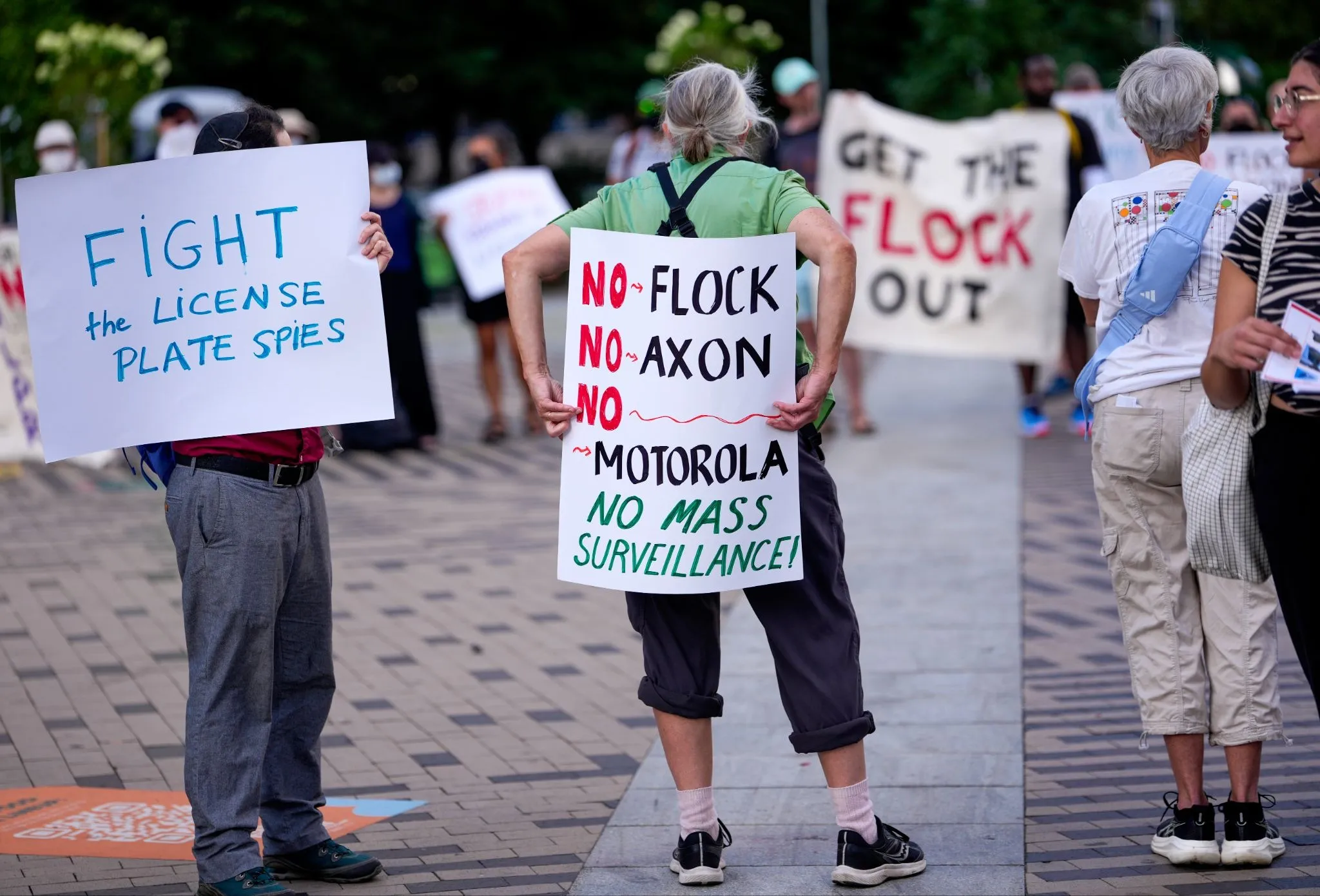
THE BATTLE OVER AI SURVEILLANCE CAMERAS

Barry Chin/The Boston Globe via Getty Images
A new video from Michigan Democratic Senate nominee Abdul El-Sayed has highlighted an emerging campaign issue in the midterms: Flock cameras.
The artificial intelligence-powered cameras collect data on passing vehicles to help law enforcement, but they’ve also sparked privacy concerns – and cases of alleged misuse by officers.
El-Sayed used the controversy to blast his opponent, Mike Rogers, for his past support of strengthening government surveillance measures.
Other Democratic House candidates are also using the issue in their campaigns – and Republican Rep. Tim Burchett of Tennessee introduced a new bill last month banning federal agencies from using Flock.
The furor over Flock comes as voters have become increasingly concerned with data centers cropping up in their communities.
Flock announced updated terms and conditions last week, emphasizing that it has never sold customer data and is learning from the public – including skeptics and public officials.
The post Trump appears to have finally settled on the right approach to Iran appeared first on MS NOW.