Lena Dunham is back. And many of us owe her an apology.
The polarizing 39-year-old filmmaker and author has a new memoir, “Famesick,” and has been making the media rounds discussing her book’s many dishy revelations, from fellow “Girls” star Adam Driver’s alleged on-set behavior to the “odd” closeness between Dunham’s musician ex Jack Antonoff and an unnamed teenage pop star. But Dunham’s book also offers some far more profound takeaways about her years in the very harsh spotlight of 2010s pop culture, her own behavior, and how she was treated (and mistreated) by the public as a result.
The daughter of two established New York creatives, Dunham burst into the mainstream consciousness in 2012, as the creator and star of the HBO series “Girls.” As the show – which followed the messy and complex lives of four 20-something women in New York – quickly became one of television’s most talked-about offerings, the then-25-year-old Dunham, too, became a cultural lightning rod. While her creative talents and keen insight into her generation’s mindset earned significant praise, she was also the target of significant and often very personal criticism.
By the end of the decade, Dunham had become something of a cultural Rorschach test, viewed by her critics as symbolic of everything supposedly wrong with millennials, hipsters, feminism and the left.
For the next decade, Dunham was one of Hollywood’s more controversial figures, regularly condemned for her appearance (and frequent nude scenes), her privileged upbringing, and her“inflammatory” or “annoying” interviews. Dunham was called a narcissist, an exhibitionist, and an unaware product of nepotism. By the end of the decade, Dunham had become something of a cultural Rorschach test, viewed by her critics as symbolic of everything supposedly wrong with millennials, hipsters, feminism and the left.
Some of the criticism was warranted. Dunham’s candor led to more than a few ill-advised interviews, including a 2016 line about abortion that was rightfully condemned as insensitive (a subsequent apology, which blamed her “delusional girl” persona for the comment, didn’t help). The following year, Dunham and then-creative partner Jenni Konner publicly defended “Girls” writer Murray Miller following sexual assault accusations, questioning the alleged victim’s honesty. (Miller denied the allegations and no charges were ever filed.) Dunham ended up retracting her statement and issuing an apology.
Those missteps were serious. Other controversies, though, were considerably overblown. An unnecessary, perhaps, confession in her first memoir, “Not That Kind of Girl” led the right-wing media to ludicrously accuse her of sexually molesting her younger sister. And while Dunham certainly could’ve depicted a far less whitewashed version of 2010s Brooklyn on “Girls,” it wasn’t exactly fair to blame one young TV creator for Hollywood’s systematic issue of on-screen diversity.
But blame Dunham we did, for that and everything else seemingly wrong with her generation, race, and gender. Millennials were self-absorbed and delaying adulthood? Dunham’s fault. Fat women were having sex and showing their bodies? Dunham, too. Liberals were getting called “cringe” and losing elections? Dunham, Dunham, Dunham.
The filmmaker’s cultural omnipresence made it easy to use her as a scapegoat, and Dunham has noted how her past self’s vocality actively fed into her own backlash. At the height of her “Girls” fame there was “intense rage” around her, Dunham told The New York Times recently, adding, “my own way of moving, whether it was through media or how I handled myself online or even in my writing, didn’t quell it.” That may be true, but it doesn’t excuse the vitriol she faced, or the misogyny and gleeful cruelty that seemed to underlie much of it.
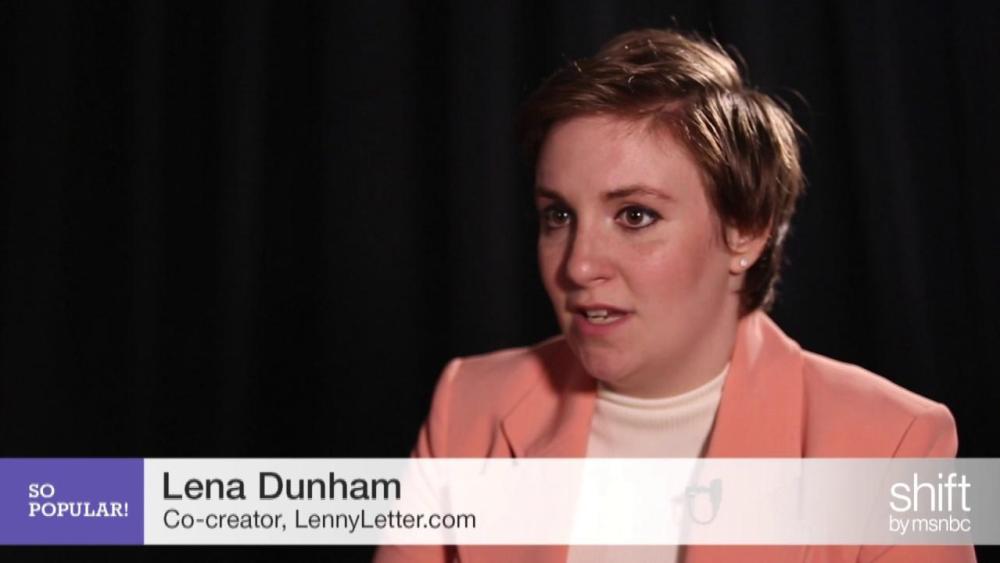
It’s been nearly a decade since “Girls” left the air, and the world is a far different place. With perspective, the series is now viewed as more of a satire and less a documentary, while its commentary on millennial life feels less shocking and more predictive. Other young, female creators have staked notable claims in the film and TV space, easing the pressure on Dunham to flawlessly represent a monolithic group. Meanwhile the celebrity gossip landscape has become both less saturated and (somewhat) kinder.
And Dunham, too, has grown up. She’s stayed largely out of the spotlight (and off social media), focusing on her health, marriage, and several decently received recent projects. “Famesick,” though, feels like the memoir of a woman who keenly understands her unique place in our culture. Dunham takes time to acknowledge her past mistakes and issue stronger apologies for them; about the assault allegation against Miller, she writes it was “an accusation I had no business attempting to debunk, no clear reason to fight, no f—–g right to an opinion on.”
Dunham is, and always has been, a flawed figure. But she never deserved our hatred, nor the expectations placed on her to get everything right. “Famesick” is a chance to both acknowledge these mistakes and welcome her back into the conversation. With Dunham involved, you know it’s bound to be interesting.
The post We owe Lena Dunham an apology appeared first on MS NOW.